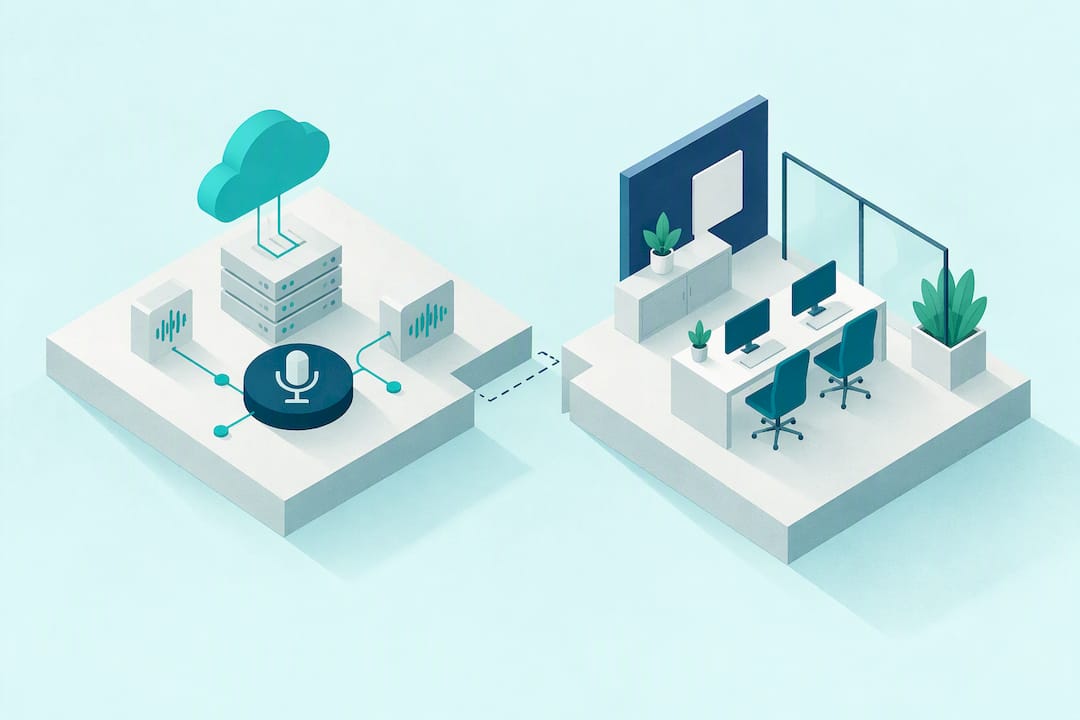
If you want a white label voicebot you can brand, configure and resell, we recommend a platform that supports fast partner launches, built-in human handoff and calendar and CRM integrations agencies need to get clients live quickly. You still need to check concurrency limits, billing flexibility and compliance controls before signing, which we cover below.
Table of Contents
- What to check when choosing a white label voicebot
- How white label voicebot pricing actually works
- Launching and reselling: the step-by-step playbook
- Staying compliant with Australian privacy and telemarketing rules
- What a solid demo and pilot should prove
- What a white label voicebot platform actually is
- What agencies get wrong when they start reselling voice AI
- How we help agencies build and launch a white label voicebot practice
- FAQ
- Sources
What to check when choosing a white label voicebot
Not every white label voicebot platform is built the same way, and the gaps usually show up after you have already sold the service to a client. Before you commit, run every vendor through the same checklist.
- Branding depth: confirm you can use your own domain, logo, client-facing documentation and support email, not just a renamed dashboard.
- Multi-tenant billing: check whether the platform supports subaccounts, Stripe-based reseller billing and per-client usage reporting.
- Concurrency and minutes: ask how many calls can run in parallel and what happens when a client exceeds included minutes.
- Integrations: verify calendar, CRM, ticketing, SIP/VoIP and webhook support for the tools your clients already use.
- Voice quality and languages: test natural-sounding speech, interruption handling and how many languages are supported out of the box.
- Human handoff: confirm calls route smoothly to a person when the conversation needs judgment, empathy or a decision the agent cannot make.
- Support and onboarding: look for documented SLAs and a real onboarding process, not just a knowledge base.
- Data controls: check who can access call data, how long it is retained and whether you can opt your clients out of using their calls for model training.
Voice cloning and multilingual support matter more for some clients than others. A medical clinic cares about appointment accuracy and after-hours coverage; an outbound sales team cares about concurrency and CRM writes. Match the checklist to the use case rather than treating every feature as equally important.
Pro Tip: Ask every vendor to show you a live call handling a messy, unscripted request, not a scripted demo, before you sign a reseller agreement.
How white label voicebot pricing actually works
Pricing structures vary more than most agencies expect, and the shape of the deal affects your margin as much as the headline rate.
- Subscription plus included minutes: a flat monthly fee covers a bundle of minutes, with overage billed per minute past that allowance.
- Pure per-minute billing: no base fee, but costs scale directly with call volume, which suits clients with unpredictable volume.
- Concurrency tiers: pricing is set by how many calls can run at once rather than total minutes, which matters for busy call centres.
- Vendor-billed vs agency-billed: vendor-billed arrangements reduce your cashflow risk but limit your pricing control; agency-billed arrangements give you margin flexibility but put collection risk on you.
- Hidden-fee questions: ask explicitly about setup fees, number porting costs, charges for additional languages and whether voice cloning is billed separately.
Cost drivers behind the scenes include speech model compute, the number of languages enabled and how many calls run in parallel, so a client who wants nine languages and five simultaneous lines will cost more to serve than one who needs a single language and low concurrency. Build your retail pricing around included minutes plus a margin on overage, and get the billing model in writing before you quote a client. Plans such as Starter, Growth and Scale are a useful reference point for how tiered reseller pricing can be structured, with pricing tailored per business rather than published as a flat rate.
Launching and reselling: the step-by-step playbook
Getting from signed vendor agreement to a paying client is mostly a sequencing problem. Here is the order that keeps pilots clean and clients confident.
- Run a pre-sales demo showing the agent handling a realistic call for the client’s industry, including an interruption and a handoff.
- Propose a short pilot, typically two to six weeks, scoped to one use case such as after-hours bookings or inbound enquiries.
- Set up the subaccount, provision the phone number and connect the client’s calendar and CRM.
- Agree pilot success metrics upfront: containment rate, number of successful handoffs and bookings or tickets completed without a human needing to intervene.
- Hand over operations with a documented escalation path so the client’s team knows exactly when and how a human takes over.
- Scale and report: once the pilot proves out, expand call types gradually and give the client a simple monthly report they can read in under five minutes.
The step that agencies skip most often is the escalation path. Clients tolerate an AI voice agent that cannot handle everything; they do not tolerate a dropped call with no fallback. Write down who picks up when the agent hands off, during business hours and after them, before the pilot starts.
Pro Tip: Price the pilot to cover your setup time, not to make a margin. The real revenue starts once the client sees the containment numbers.
Staying compliant with Australian privacy and telemarketing rules
Reselling voice AI in Australia means your clients inherit obligations under the Privacy Act, not just a technical setup. The OAIC’s guidance on commercially available AI products treats using AI to infer or generate personal information as a collection event, which means it triggers Australian Privacy Principle obligations and requires consent that is current, specific and informed.
If a vendor plans to use call data to train its models, the OAIC’s guidance on training generative AI models requires clear, specific consent or a genuine opt-out, so a vendor that lets you disable training use for client data makes your own compliance simpler.
- Confirm the vendor’s data retention period and whether you can access or delete call records on a client’s request.
- Build consent capture and an audit trail into the onboarding flow for every client, not just the ones doing outbound calls.
- For outbound work, check numbers against the Do Not Call Register and follow ACMA’s calling windows and caller identification rules.
- Keep sales material honest about what the agent can and cannot do.
Enforcement is real: ACMA reporting on telemarketing and spam shows that consent and unsubscribe failures have led to significant enforcement action, which means these are operational requirements, not paperwork. The ACCC’s recent artificial intelligence report separately warns against overstating what an AI system can do, so avoid promising “human-level” accuracy in pitch decks or client contracts. None of this is legal advice, and a client with complex outbound or collections workflows should get its own advice on Privacy Act obligations before launch.
What a solid demo and pilot should prove
A vendor’s claims mean little until you have heard the agent handle a real call and watched it write data back into a calendar or CRM correctly. A live demo should let you test the conversation flow yourself, including interruptions and edge cases, rather than watching a recorded walkthrough.
- Listen for natural pacing, correct handling of interruptions and sensible responses to an off-script question.
- Confirm the agent writes bookings, notes or tickets into the connected calendar or CRM without manual cleanup.
- Test what happens when the call genuinely needs a person: does the handoff feel smooth, or does the caller notice a jarring switch?
- Check latency on a normal mobile connection, not just a clean office line.
- Ask what the failure mode looks like when the agent cannot understand the caller at all.
Containment, the share of calls the agent resolves without needing a person, is the number that tells you whether a pilot is working. Treat any vendor’s containment claim as a starting hypothesis to test in your own pilot, not a guarantee, and insist on seeing the raw call transcripts behind the number before you report it to a client.
What a white label voicebot platform actually is
A white label voicebot platform is a voice AI system built by one company and rebranded, configured and resold by another, usually an agency or software reseller, under its own name. The underlying speech recognition, conversation logic and integrations belong to the platform provider, but the client-facing experience, logo, domain and account management belong to you.
This matters because it changes who owns the client relationship. Your client books a demo with your brand, pays your invoice and calls your support line when something breaks, even though the voice agent itself runs on infrastructure you do not own or maintain. The platform provider handles the speech models, uptime and feature development; you handle sales, onboarding, client communication and the margin on top of whatever billing arrangement you negotiate.

Agencies turn to this model because building a voice AI stack from scratch, speech recognition, natural language handling, telephony and CRM integrations, takes specialist engineering most agencies do not have in-house. White labelling lets you offer role-based agents for reception, sales, support or collections under your own brand within days rather than building and maintaining that infrastructure yourselves.
What agencies get wrong when they start reselling voice AI
The agencies that struggle with white label voicebots almost always oversell the pilot. They promise a client the agent will “handle everything” before anyone has tested how it behaves on a bad phone line, an angry caller or a question nobody scripted for. Set the expectation correctly from day one: the agent takes the repetitive, high-volume calls, bookings, basic enquiries, after-hours coverage, and hands the moments that need judgment or empathy straight to a person.
Start with one use case and a short pilot. Measure containment and handoff quality before you expand to a second call type or a second client. The agencies that scale fastest are the ones that can show a prospective client real numbers from a real pilot, not a vendor’s marketing claim.
If you are starting this week: book a demo, map two concrete use cases for your first client, such as after-hours bookings and tier-1 support, and commit to a pilot window of two to six weeks before you sell anything bigger.
— Alston
How we help agencies build and launch a white label voicebot practice
We built 42Voice so agencies can brand, configure and sell voice AI without building the underlying technology themselves. Every agent, whether it is an AI Receptionist, AI Sales Development Rep, AI Tier-1 Help Desk or AI Collections Agent, is backed by human-in-the-loop quality review and a clean handoff to your client’s team when a call needs a person.

- We can have a branded pilot live quickly, not after months.
- Agencies wanting a structured compliance review alongside their rollout can also look at WithinBounds for AI governance and audit support.
Book a free 15 minute demo and we will walk through a real call, a real handoff and what a pilot would look like for your first client: 42voice.
FAQ
What is a white label AI voice agent platform?
A white label AI voice agent platform is voice AI technology built by one provider that an agency rebrands, configures and resells as its own service. The agency handles branding, client relationships and support, while the provider runs the underlying speech and integration technology.
How much does a voice bot cost?
Pricing depends on the plan, included minutes, concurrency and languages required, so costs are typically quoted per business rather than published as a flat number. Our own Starter, Growth and Scale plans are priced this way after a short scoping conversation.
Is a voicebot safe to use for customer calls?
A well-configured voice agent is safe when it is paired with clear consent practices, data retention limits and a defined human handoff for calls that need judgment or empathy. The OAIC’s guidance on AI products sets out the consent and collection obligations that apply when AI handles personal information.
How does a voicebot work?
A voice agent uses speech recognition to understand a caller, a conversation engine to decide how to respond, and integrations to write results into a calendar, CRM or ticketing system in real time. When a call needs a decision the agent cannot make, it hands off to a person rather than guessing.
Sources
- Guidance on privacy and the use of commercially available AI products | OAIC
- Action: scams, spam and telemarketing — January–March 2026 | ACMA
- Recent developments in artificial intelligence | ACCC
Recommended
- Live Within Days to Automate Phone Calls for Australian SMEs
- Fix AI Call Compliance in 90 Days: Checklist for Compliance & Ops
- Containment 70–95%: Voicebot Customer Service Playbook for CX Leaders
This article is general information about AI voice technology and isn’t legal or compliance advice. Requirements for call recording, AI disclosure and outbound calling vary by state and use case.