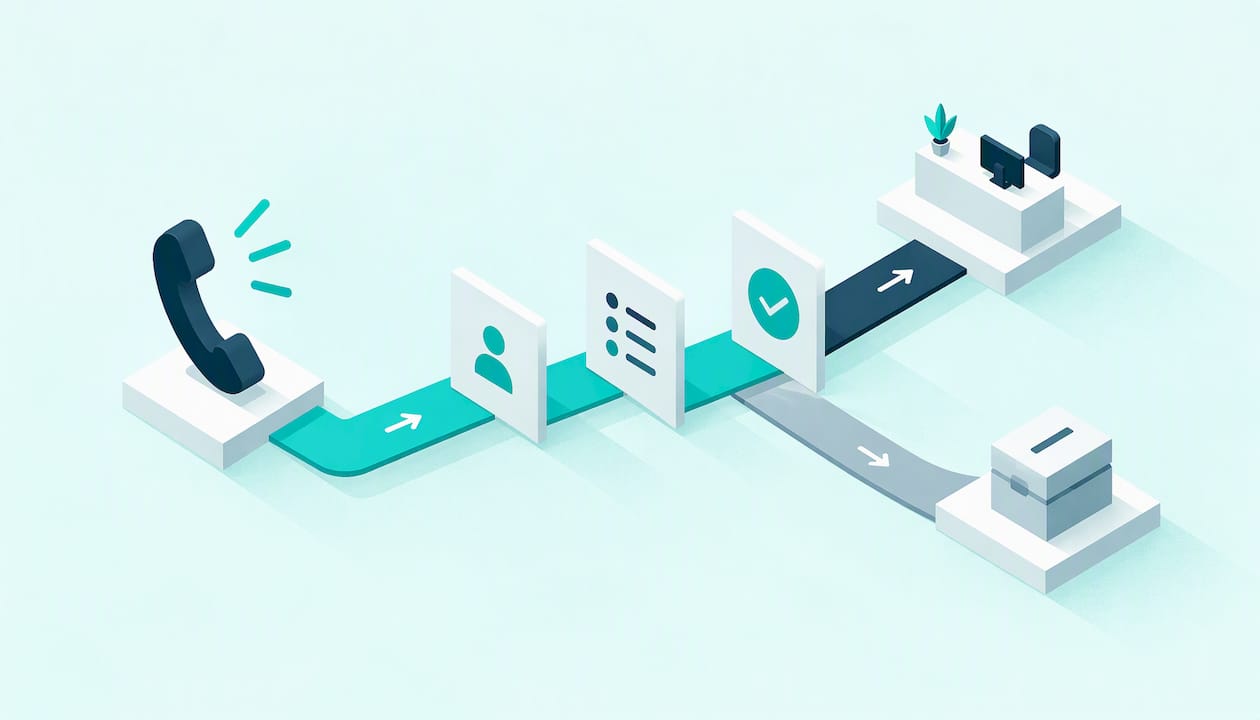
Phone lead capture means getting a caller’s name, number, need and next step into your system every time someone rings, whether you answer live or not. To do it well, answer or return every call quickly, ask a short set of qualifying questions, log the answers in your calendar or CRM, and check the outcomes each month. This guide covers each step, the Australian rules that apply, and where a person should take over.
I’m Alston from 42Voice. We build AI voice agents for small and medium businesses, so we hear a lot about missed calls. Most of the pages that rank for this topic are about web forms and trade-show scanners. If you run a plumbing business, a dental clinic or a café, the phone is still where many of your best leads arrive.
Table of Contents
- What phone lead capture is
- Why the phone still deserves attention
- Step 1: Decide what a good lead looks like
- Step 2: Ask the right questions, in the right order
- Step 3: Handle missed calls and after-hours enquiries
- Step 4: Turn calls into bookings, quotes and payments
- Step 5: Route, record and connect your systems
- The Australian rules to know
- What we think
- How to tell whether it is working
- Where 42Voice fits
- FAQ
- Book a free 15-minute demo
- Sources
What phone lead capture is
A lead is someone who has shown interest in what you sell. Capture is the moment you record who they are and what they want, so someone can act on it. On the web that is a form. On the phone it is a conversation, and the details are easy to lose.
A call can fail to become a lead in a few ways:
- Nobody answers, and the caller rings the next business on the list.
- Someone answers while busy, scribbles a number on a scrap of paper and never rings back.
- The call is answered well but nothing is logged, so no one can tell which advertising produced it.
- The call comes after hours, goes to voicemail and the caller hangs up.
Good phone lead capture closes all four gaps. Every call is answered or returned fast, the same questions are asked each time, the details land in one place, and the result is tracked.
Why the phone still deserves attention
If you are on a roof, under a sink, or with a patient, you cannot answer. That is the normal state of a trades or clinic business, not a failing. The problem is that the caller who reached voicemail is often ringing several providers at once. The first business to respond usually gets the job.
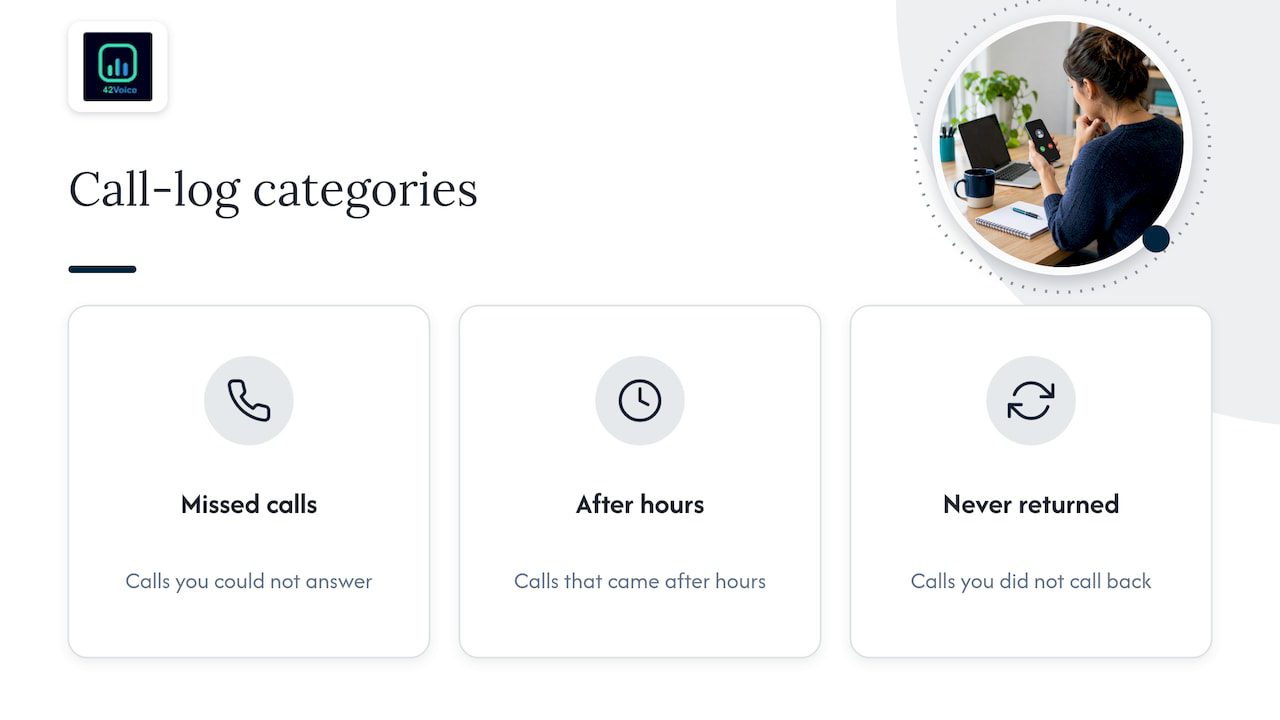
We do not publish a made-up figure for how many calls go unanswered, because it varies enormously by business. Your own phone records will tell you. Pull a week of call logs from your provider and count calls that were missed, calls that came after hours, and calls that were never returned. Many owners are surprised by the third number.
If abandoned calls are your main concern, our guide on reducing call abandonment in Australia goes deeper on fixing the problem calls first.
Step 1: Decide what a good lead looks like
Before you capture anything, define what you want. Australian agency guidance on tracking phone leads recommends defining a qualified lead before you measure performance. Their example is a caller inside your service area who needs work you charge for.
Write your own definition in one sentence. For example:
- Electrician: a homeowner or business in our service area needing a quote or repair we offer.
- Dental clinic: a new or existing patient who wants an appointment type we provide.
- Restaurant: a caller asking about a booking for a group size and date we can host.
- Finance or professional services: a caller from a business that fits our minimum size and service type.
This sentence becomes your filter. It also tells you which calls are not leads: sales pitches, wrong numbers, suppliers and job seekers. Those still need handling, but not the same follow-up.
Step 2: Ask the right questions, in the right order
The aim is enough information to act, without an interrogation. Callers hang up when asked for ten details before anyone helps them. Keep it to the essentials first, and add detail on the follow-up call.
The five details to capture on every call
- Name. Ask for it early and use it.
- Best phone number. Read it back to confirm. A wrong digit wastes the whole lead.
- What they need. In their own words, in one or two sentences.
- Location or suburb. This tells you straight away whether you can service them.
- Urgency. Today, this week, or just researching.
Qualifying questions that depend on your business
Add two or three questions that separate a serious enquiry from a casual one:
- Trades: What is the problem, is it an emergency, and is it a house, unit or commercial site?
- Clinics: Are you a new patient, and which service do you need?
- Hospitality: How many people, which date and time, and is it a special occasion?
- Sales teams: What are you trying to solve, and who else is involved in the decision?
If you want a deeper look at scoring and routing enquiries, our practical guide to AI lead qualification covers it for sales teams.
A sample call
Here is the kind of exchange a well-set-up agent has. It is written as a dialogue so you can see how short it is.
Agent: Thanks for calling Harbourside Plumbing. Can I take your name?
Caller: Priya.
Agent: Thanks, Priya. What’s going on today?
Caller: The hot water system is leaking in the laundry.
Agent: Sorry to hear that. Which suburb are you in, and is water still running now?
Caller: Marrickville, and yes, a slow drip.
Agent: Got it. I’ll pass this to our on-call plumber as urgent. Is 04XX XXX XXX the best number?
The business name and details are invented for illustration. The point is that the whole capture takes under a minute and ends with a clear next step.
Step 3: Handle missed calls and after-hours enquiries
There are three practical options for calls you cannot answer, and many businesses combine them.
| Option | What it does well | Where it falls short |
|---|---|---|
| Voicemail | Costs nothing extra | Many callers will not leave a message, and you must listen and ring back |
| Human answering service | A person takes the call | Hours and cost are limited by the provider, and call detail may not reach your CRM |
| AI voice agent | Answers every call, any hour, and logs details straight away | Needs a good setup and a clear handoff for complex or sensitive calls |
Whichever you choose, set a rule for follow-up speed. Aim to contact every new lead within a few minutes during business hours, and first thing the next morning for after-hours enquiries. You choose the number, but write it down and measure it.
An AI receptionist can cover the gaps. It answers when your team is busy or closed, asks your qualifying questions and books the job where it can. Our AI Receptionist does this, and urgent or unusual calls go to your team through a human handoff.
Step 4: Turn calls into bookings, quotes and payments
Capture is only half the job. The call needs a next step that the caller can see.
- Bookings: connect your calendar so the caller gets a time while still on the line. This suits clinics, salons, mechanics and restaurants. See how call answering works for auto repair shops for one example, or our booking agent page.
- Sales enquiries: capture the need, then pass hot leads to a salesperson with the notes attached, so they do not start from scratch.
- Payment calls: inbound calls about an overdue invoice are a different type of call. They need a calm tone and clear rules for when a person steps in. Read about debt collection agents for SMEs before you automate any of this.
- Other languages: if your customers speak Mandarin, Vietnamese, Arabic or another language, a caller who cannot be understood will leave. Our agents answer in 9+ languages, so a caller can be understood from the first sentence.
Step 5: Route, record and connect your systems
A captured lead that sits in a notebook is a lost lead. Decide where each piece of information goes.
- Calendar: bookings go straight into the diary.
- CRM or job system: every lead gets a record with name, number, need, suburb, urgency and call source.
- Notification: your team gets a text or email for urgent leads.
- Transcript or summary: someone can read what was said in seconds.
If you use Salesforce, our guide to Salesforce call logging explains how call records can flow in. Reading call transcripts and recordings is also becoming standard practice, and this overview of AI call recording in customer service shows how it fits into daily operations.
If you analyse how callers sounded, our practical guide to call sentiment analysis shows how to use that sensibly.
The Australian rules to know
This is general information, not legal advice. For your own situation, talk to a lawyer or contact the regulator.
Inbound calls and your privacy obligations
When someone rings you and gives you their details, you are collecting personal information. Under the Privacy Act 1988 (Cth), organisations covered as APP entities must ensure consent to handle personal information is informed, voluntary, current and specific. The same OAIC guidance says small businesses with an annual turnover of $3 million or less are generally not APP entities, with exceptions, including some health service providers and businesses that trade in personal information.
So a small trades business may be outside the Act, while a small medical or allied health clinic probably is not. Check the OAIC’s guidance or get advice before assuming either way. Tell callers why you are collecting their details, and only keep what you need.
If you record calls, tell the caller at the start. Recording rules differ between states and territories, so check your own jurisdiction.
Outbound follow-up calls
Ringing back someone who just called you is different from cold calling. But if your follow-up becomes marketing, such as ringing past enquiries about a new offer, telemarketing rules may apply. Points to check:
- Do Not Call Register: numbers on the register generally cannot be telemarketed unless the person has consented. Check the Do Not Call Register industry guidance.
- Calling hours: telemarketing calls are permitted on weekdays from 9:00 am to 8:00 pm and on Saturdays from 9:00 am to 5:00 pm. They are not permitted on Sundays or national public holidays, unless the consumer has consented to being called then (same source).
- Caller ID and contact number: telemarketers must show their caller ID and keep a return contact number available for at least 30 days from the original call (same source).
- Consent: an ACMA investigation report noted that if consent has no stated period, it is taken as withdrawn after three months. The same report said the business had the burden of showing the consent it claimed.
The practical lesson: keep a record of when and how each person agreed to be contacted.
Telling people they are talking to AI
An AI voice agent should not pretend to be a person. Say upfront that it is an automated assistant, and offer a way to reach a human. Regulators are still updating guidance on AI in this area, so check current advice from the ACMA and the OAIC before you launch, especially for outbound sales or collections.
What we think
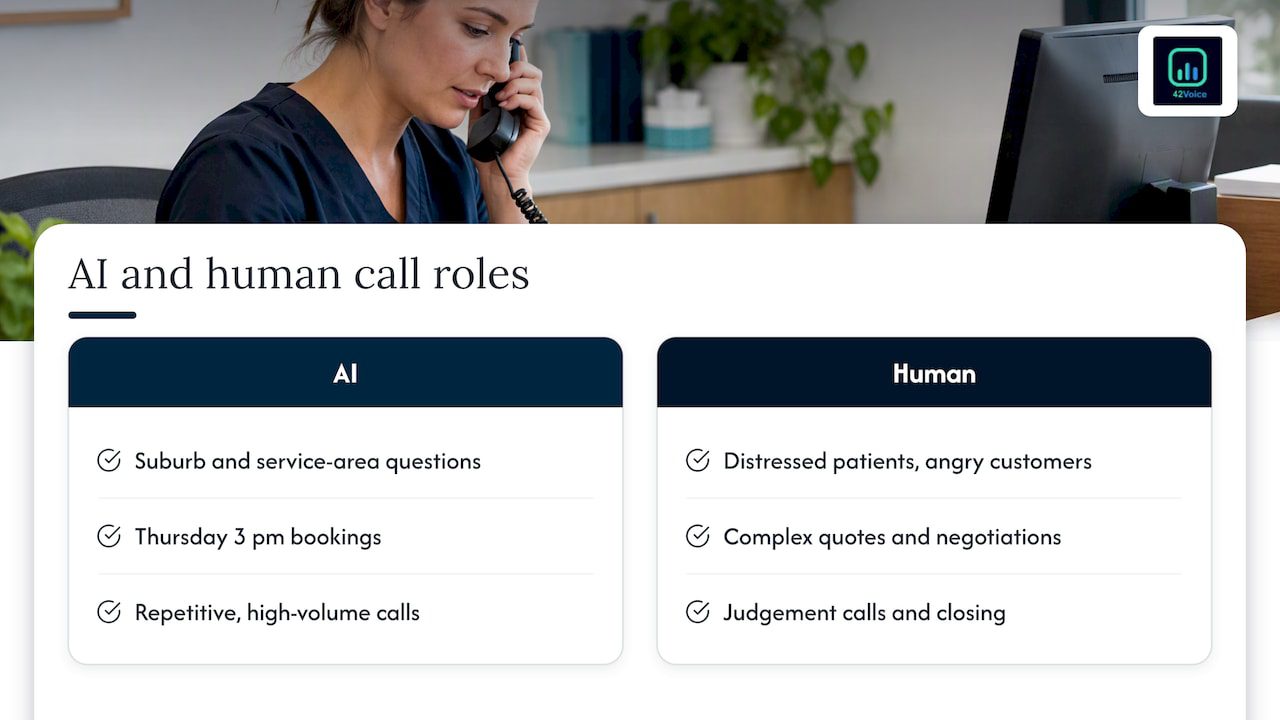
We have one firm view: let AI take the repetitive, high-volume calls, and give every human moment to a person.
A caller asking whether you service their suburb, or wanting Thursday at 3 pm, does not need a person’s empathy. Your staff are better used elsewhere. A distressed patient, an angry customer, a complicated quote, a negotiation or a closing conversation needs your people.
That is why every agent we build has a human handoff. Calls that need judgement go to your team, with the details already captured so the caller does not repeat themselves. We also review calls, with a human in the loop, so quality does not drift once the agent is live.
Honest limits matter too. An agent will not know a customer’s history unless it is connected to your CRM. It can misunderstand a strong accent or a noisy line. It should not make promises you have not approved. Start with a narrow set of calls, listen to the first few dozen, then widen the scope.
What we do not do is frame this as replacing staff. If you are missing calls today, you are not replacing anyone. You are covering calls nobody had time to answer.
— Alston
How to tell whether it is working
Track the numbers that connect calls to money. Search Digital’s Australian guidance lists metrics worth tracking: answered and missed calls, caller number, time, duration, source, campaign, landing page, call outcome, qualified leads, bookings, quotes, wins and revenue.
A few cautions:
- Duration is a proxy. A short call may be a wrong number or a quick, perfect booking. Use it to filter out obvious non-leads, not to judge quality.
- Outcomes matter more. Have your team or agent tag each call: qualified, booked, quoted, won or lost.
- Look downstream. The real test is what happens in your CRM or job system, not how many calls came in.
A simple monthly review has four questions:
- How many calls did we get, and how many went unanswered?
- How many became qualified leads?
- How many became bookings or quotes, and how many were won?
- Which source or campaign produced the best ones?
If you cannot answer these in ten minutes, your capture is not connected well enough yet.
Where 42Voice fits
If you want this running without building it yourself, we set up role-based agents for reception, sales, support and collections. They answer 24/7, work in multiple languages, plug into your calendar, CRM and ticketing tools, and hand complex calls to your team. We aim to go live in 3 to 5 days, with no lock-in contracts.
For inbound capture, start with the AI Receptionist. For outbound follow-up, see the AI Sales Development Rep. Pricing is tailored to each business across our Starter, Growth and Scale plans, so see the pricing page for what each includes.
FAQ
Is phone lead capture the same as lead generation?
No. Lead generation is how you get people to contact you, through advertising, referrals or search. Phone lead capture is what happens when they ring: recording who they are, what they need and what happens next. You need both, but capture is often the cheaper one to fix.
What should I do with a call that comes after hours?
Answer it with an agent or answering service that collects the five key details and flags urgent jobs. Then follow up first thing the next business morning, or sooner for emergencies. Voicemail alone loses many callers who will not leave a message.
Can I use an AI voice agent to ring leads back?
Often yes, but the rules depend on the call. Ringing someone who just enquired is different from telemarketing, which brings in Do Not Call Register, calling hours, consent and Privacy Act considerations. Check these with a lawyer or the regulators, and disclose that the caller is an AI.
How long should it take to set up?
It depends on how many call types you handle and which systems you connect. With us, a typical agent goes live in 3 to 5 days. Starting with one call type, such as new enquiries or bookings, keeps it simple.
Book a free 15-minute demo
If calls are slipping through, we can show you how it would sound on your own business in 15 minutes. Book a free demo.
Sources
- How to Track Phone Leads and Prove Marketing ROI, Search Digital
- Industry Standards, Do Not Call Register
- Telemarketing investigation final report, ACMA
- Australian Privacy Principles guidelines, OAIC
- How AI-powered call recording transforms customer service
Recommended
- Live Within Days to Automate Phone Calls for Australian SMEs
- Caller ID Based Routing: A Practical Guide for Australian SMEs
- Call Sentiment Analysis: A Practical Guide for Australian SMEs
- Stop Wasting Closers’ Time: 4 Steps to Phone Lead Qualification for SMBs
This article is general information about AI voice technology and isn’t legal or compliance advice. Requirements for call recording, AI disclosure and outbound calling vary by state and use case.