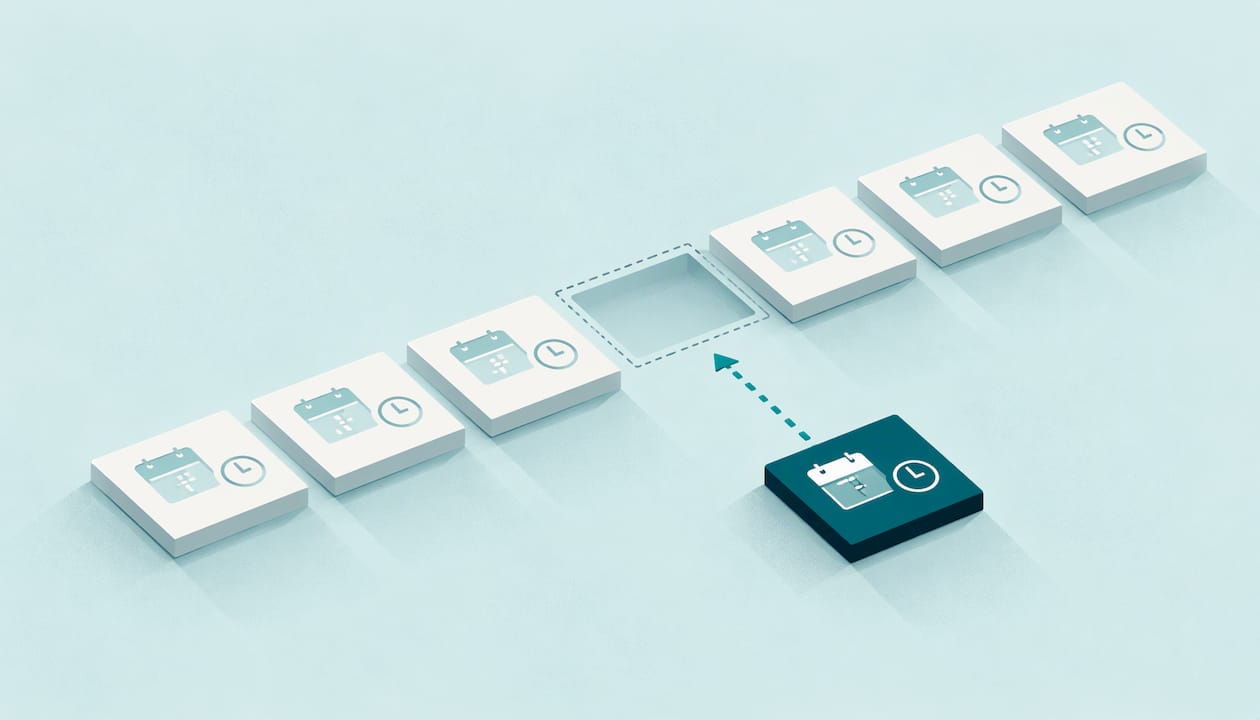
The fastest way to reduce no-show appointments is to make attending easy and cancelling easier. Send two reminders that tell people exactly what to do, give them a one-step way to confirm or reschedule, and refill any slot that opens up. Then follow up kindly with the people who still miss out. Most no-shows are forgetfulness and friction, not bad intent, so most of the fix is communication. This guide walks through the steps in the order we would do them in a clinic, salon, trade business or restaurant, and shows where a person should step in instead of a system.
Table of Contents
- What counts as a no-show, and why people miss appointments
- Measure your no-show rate before you change anything
- Send reminders that people act on
- Make confirming, cancelling and rescheduling effortless
- Fill the gaps and remove the barriers
- Follow up kindly after a miss
- Fees, policies and privacy: what to think through first
- Our view: automate the routine, keep the human moments
- Where 42Voice fits
- A 30-day plan you can start this week
- FAQ
- Sources
What counts as a no-show, and why people miss appointments
A no-show is a missed visit where the person neither turned up nor cancelled or rescheduled beforehand. It is different from a late cancellation, which usually means notice inside 24 hours, too late to fill the slot, according to Tebra’s overview of patient no-shows. The American College of Allergy, Asthma and Immunology frames the cost as the share of appointment time lost when people do not show or cancel at the last minute. That definition is useful for any business that sells time.
Why do people miss them? Australian guidance on missed appointments lists forgetting, transport problems, anxiety about the procedure, cost worries and unclear cancellation pathways. Work conflicts, emergencies and feeling too unwell to attend show up on other lists too.
Two things follow from that:
- Most causes are fixable with a clear reminder and an easy way out. If cancelling means waiting on hold, people simply do not call.
- Not every miss is carelessness. RACGP commentary notes that new patients tend to miss more often than regulars, so the first booking deserves extra attention.
Measure your no-show rate before you change anything
You cannot tell whether a fix works without a baseline. Pull the last three months of bookings and calculate no-shows as a share of all scheduled appointments. Then split the number:
- By practitioner or staff member.
- By appointment type (initial consult, follow-up, quote visit, table booking).
- By day and time.
- By new versus returning customers.
The pattern usually points to where to start. If first visits on Monday mornings carry most of the misses, you do not need a business-wide overhaul.
Define your terms as well. A guide for allied health practices suggests clear definitions for each appointment state and keeping the original record when someone reschedules. Without that, a rescheduled booking can quietly disappear from your numbers and flatter the result. Track a few extras if you can: how much notice was given, how many slots you refilled, and how many reminders failed to reach anyone (wrong number, full voicemail).
A caution on expectations. A retrospective study of Queensland public dental services covered 63,238 appointments before and 55,028 after an SMS intervention. It found mixed results: adult attendance rose from 73.5 to 77.7 per 100 appointments, while the children’s service and failure-to-attend rates behaved differently. Reminders help, but test them on your own customer groups and watch the numbers by segment.
Send reminders that people act on
Reminders are the highest-return change for most businesses, and the evidence goes back a long way. In a Melbourne Royal Children’s Hospital study in the Medical Journal of Australia, SMS reminders sent three working days ahead were associated with a failure-to-attend rate of 14.2% versus 23.4% without them. A US randomised trial found that two automated reminders, at 3 days and 1 day before, beat a single reminder. Different settings, same direction.
A simple cadence
- At booking: a confirmation with the date, time, address and how to change it.
- Two to three days before: a reminder with preparation details, parking or access notes, and what to bring.
- The day before or the morning of: a short SMS nudge.
That pattern, email for detail and SMS for the quick prompt, is what Australian practice-marketing advice commonly recommends. Sending the first reminder a few days out matters because it leaves time to refill a cancelled slot.
What to put in the message
Victorian Government behavioural insights work on specialist clinic attendance found that personalised SMS wording, such as noting a specific doctor has set aside time, can lift engagement. The St Vincent’s reminders in that case study named the clinic, location, date and time, and asked people to call if they could not attend.
A message you can adapt:
Hi Sam, a reminder that Dr Lee has set aside 10:30am on Tuesday 12 May for you at our Parramatta clinic. Reply YES to confirm, or tap the link to move or cancel: [link]
Keep it short, name a real person or room, and never include sensitive clinical detail. One Victorian medical centre’s policy says SMS reminders need signed consent and that electronic messages cannot be guaranteed private, which is a good reason to keep content minimal.
When a phone call beats a text
Some customers do not read texts: older patients, people with limited English, and anyone who just had a bad experience. A short call to confirm, in the customer’s preferred language, catches many of them. This is a high-volume, repetitive task, which is exactly where a voice agent earns its keep. We cover the scripts and rules in our guide to appointment confirmation calls.

Make confirming, cancelling and rescheduling effortless
People who cannot easily cancel often just do not come. Put a confirm, cancel or reschedule option in every message, and make sure it lands on live availability instead of a contact form. Practice-software vendors describe the same approach: for example, Halaxy says its secure appointment-summary link lets patients cancel or reschedule without contacting the practice, and you can set a minimum notice period.
Whatever tools you use, check these basics:
- Can someone reply YES or NO by text and have your calendar update?
- Does cancelling offer a new time straight away?
- Can someone reach a human by phone if the link does not suit them?
- Is the cancellation window written in plain English at the point of booking?
That last point is about fairness as much as tactics. A person who knows the rule and has an easy way to follow it is far less likely to ghost you.
Fill the gaps and remove the barriers
Even with great reminders, some cancellations will come in late. Treat each one as a slot to refill:
- Waitlist: keep a list of people who want an earlier time and offer them the opening by SMS or a call, first to reply gets it.
- Same-day capacity: hold a few slots for urgent or short-notice bookings, which is a standard tip in public health guidance on reducing no-shows.
- Flexible hours: evening or weekend appointments suit people who cannot leave work. Even one late night a week can help.
- Cost and transport: if cost or getting there is the barrier, say what you offer (telehealth, bulk billing where applicable, clear fees up front) before the visit, not after.
For trades, the equivalent is a booked job window. Tell customers a time range, text when you are on the way, and let them reschedule with one tap rather than leave you standing in the driveway.
If you miss calls while on the job or after hours, people often book elsewhere or never book at all. Our guide to after-hours appointment booking shows how to keep that door open.
Follow up kindly after a miss
The message after a no-show matters as much as the reminder before it. A short, non-judgmental note such as “we missed you today, would you like to rebook?” can recover people who meant to come but felt awkward calling, as Australian practice advice suggests. Send it the same day, include a rebooking link, and skip the lecture.
This is also where a person should step in. RACGP commentary warns that people who miss appointments often may have complex needs and may need extra help getting to appointments. In a clinic, a repeat miss should prompt a human conversation, not another automated nudge. In any business, someone who has missed twice deserves a call from a team member who can ask what is going on.
Fees, policies and privacy: what to think through first
A cancellation policy sets expectations, and many Australian providers use one. St John Health, for example, asks for at least one hour’s notice and charges a fee for missed or late-cancelled appointments. Before you introduce a fee, consider:
- Enforcement is hard. RACGP commentary notes some doctors find fees difficult to enforce and are unsure they reduce non-attendance. A fee works best as a backstop, with reminders doing the heavy lifting.
- Make exceptions human. Emergencies, illness and bereavement call for a person’s judgement, not an automatic charge.
- Escalate gradually. The same commentary describes practices blocking serial offenders from online booking so they book in person instead.
Privacy matters too. The Office of the Australian Information Commissioner says health service providers can generally imply consent for administrative reminders and missed-appointment notices when patients have been informed. Marketing is different: RACGP guidance says direct marketing needs patient consent. Keep reminders strictly about the appointment, and do not slip in promotions. This is general information, not legal advice. Check your own obligations under the Privacy Act and any industry rules.
Our view: automate the routine, keep the human moments
Most no-show advice stops at “send a text”. That helps, but a text cannot answer a question. The customer who replies “can I come at 4 instead?” or “I’m nervous about this” still needs someone to respond.
That is where we think voice automation fits. A voice agent can make the routine confirmation calls, take reschedule requests, check the calendar, offer the next free time and answer after-hours calls so people are not left unanswered. It does not replace your team. It clears the repetitive, high-volume calls so your people can spend time on the conversations that need empathy and judgement.
We build every agent with human handoff, so when a call gets sensitive, complicated or emotional, it goes to a person with the context already captured. We also back each agent with human-in-the-loop quality review, and we are upfront about limits: a distressed patient, a billing dispute or a clinical question should always go to staff.
Our agents connect to the calendars and CRMs you already use, and we aim to have them live in 3 to 5 days with no lock-in contracts. Start small. Run confirmation calls for one appointment type, measure your no-show rate against last quarter, and expand from there.
Alston
Where 42Voice fits
If phones are where your no-shows and missed bookings happen, our AI Receptionist answers inbound calls around the clock, books and reschedules through your calendar, and passes complex calls to your team. Pricing is tailored to each business, and you can see the plan structure on our pricing page.

If you run a dental clinic, our guide to AI dental appointment booking calls covers what managers should know before they start. If you want to bring lapsed customers back, see how reactivation call automation works for clinics. Want to see it with your own appointment types? Book a free 15-minute demo at 42voice.com/contact.
A 30-day plan you can start this week
- Week 1: calculate your no-show rate and split it by appointment type, day and new versus returning customers.
- Week 2: set up the three-step reminder cadence and add a confirm, cancel or reschedule link to every message.
- Week 3: start a waitlist and a same-day follow-up message for anyone who misses.
- Week 4: review the numbers by segment. Keep what works, change what does not, and decide whether a phone-based layer for confirmations and after-hours calls would help.
Compare against your baseline, not against a number from another industry. A small, steady drop is a real result.
FAQ
What does a no-show appointment mean?
It means someone booked a time and did not attend, without cancelling or rescheduling first. A late cancellation is different: the person tells you, but too close to the appointment for you to fill the slot. Both cost you time, so it helps to track them separately.
Why do people not show up for appointments?
The most common reasons are forgetting, transport problems, anxiety, cost worries and not knowing how to cancel. Work conflicts and sudden illness also play a part. Clear reminders and an easy way to reschedule address most of these.
How far ahead should I send a reminder?
Two reminders usually work better than one. A trial found that reminders at 3 days and 1 day before beat a single message. Sending the first reminder a few days out also gives you time to refill a freed slot.
What is the best way to handle a cancellation?
Make it easy, thank the person, and offer a new time straight away. Then offer the freed slot to your waitlist. If someone cancels repeatedly, a friendly call from a team member is better than an automated message.
Sources
- Why Patients No-Show: Causes and Fixes | Tebra
- Patient No Shows | College Learning Connection (ACAAI)
- How to reduce appointment no-shows and cancellations
- RACGP: How much do no-show patients impact you?
- Reduce allied health cancellations and manage rescheduling
- SMS reminders to improve outpatient attendance for public dental services
- Use of SMS text messaging to improve outpatient attendance (MJA, 2005)
- Optimizing number and timing of appointment reminders (PubMed)
- Cutting Clinic No-Shows: What Actually Reduces Missed Appointments
- Behavioural insights case study: Specialist clinic attendance (Victorian Government)
- Our Policies, Craigieburn CMC
- Enable patients to cancel or reschedule appointments (Halaxy)
- Patient Information Guide, St John Health
- RACGP: Marketing
- Communications with patients | OAIC
Recommended
- Small Businesses: Get After Hours Appointment Booking Live in Days
- Appointment Confirmation: Scripts, Australian Rules, Human Handoffs
- Payment Reminder Calls: When to Make Them and What to Say
- AI Dental Appointment Booking Calls: What Clinic Managers Must Know
This article is general information about AI voice technology and isn’t legal or compliance advice. Requirements for call recording, AI disclosure and outbound calling vary by state and use case.