A human-like AI voice is one that callers can talk to without feeling they are fighting a machine. On the phone, that depends on far more than the timbre of the voice. It depends on how quickly the agent responds, whether it understands what was said, whether it can book the job, and whether it passes you to a person when the call needs one.
Most pages that rank for this topic are text-to-speech generators for voiceovers. That is a different job. If you run a business and want a voice that answers real calls, this guide is for you. We are Alston and the team at 42Voice, and we build AI voice agents for Australian small and medium businesses. Here is what makes an AI voice sound human on a live call, what to test before you trust one, and where a person should always take over.
Table of Contents
- Voiceover voices and phone agents are not the same thing
- What makes an AI voice sound human on a call
- Should your AI sound exactly like a person?
- Where a human-like voice earns its keep
- Example: a booking call that sounds right
- How to test whether a voice agent sounds human enough
- Where humans should take over
- Outbound calls: extra care
- Our view: automate the certainty, keep the humans for the moments that matter
- Voice cloning: when your own voice makes sense
- A human-sounding voice for your business phone line
- FAQ
- Hear it on your own calls
- Sources
Voiceover voices and phone agents are not the same thing
A text-to-speech tool turns a script into audio. You write the words, pick a voice and download a file. If the result sounds a bit flat, you edit and try again. Nobody is waiting on the line.
A phone agent works live. The caller speaks, interrupts, mumbles, gives a street address over road noise and changes their mind halfway through a sentence. The agent has to listen, work out what the caller wants, decide what to do, and speak, all in about the time a polite person would pause.
So when someone asks for a human-sounding AI voice for their business, we ask a different question: what should the voice be doing on the call? A beautiful voice that cannot check your calendar is a nice demo. A good-enough voice that books the appointment, texts the confirmation and flags the tricky call for you is a working receptionist.
What makes an AI voice sound human on a call
Five things matter, and the voice itself is only one of them.
1. Pace and turn-taking
People notice delay before they notice accent. A long silence after “Hi, I’d like to book a service” tells the caller they are talking to a system. Natural conversation has short gaps, quick acknowledgements and the ability to be interrupted. If the caller says “actually, make that Thursday”, the agent should stop talking and listen.
When you test any voice agent, interrupt it on purpose. Talk over it. Change your answer mid-sentence. This tells you more than any scripted demo.
2. Plain, local language
A human receptionist in Brisbane does not say “Your request has been successfully logged.” She says “No worries, you’re booked in for Tuesday at 9.” The wording of the agent matters as much as its sound. Short sentences, everyday words and Australian phrasing (“arvo”, “ute”, “Medicare card”, suburb names said correctly) make the call feel like it is with someone who works in your town.
This is also why we write each agent’s script around your actual business: your services, your service area, your opening hours, your common questions. A generic script produces a generic-sounding call.
3. Understanding, not just speaking
A lifelike voice that mishears “Mt Gravatt” or asks for the same detail three times breaks the illusion faster than any robotic tone. Good agents confirm key details back (“That’s 14 Smith Street, Paddington, is that right?”) the way a careful person would. Confirmation is human behaviour, and it also catches errors.
4. Doing something useful
Callers forgive a slightly synthetic voice when the call gets them what they wanted. They do not forgive a pleasant voice that takes a message and does nothing. An agent connected to your calendar, CRM or ticketing tool can offer real slots, create the lead record and send a confirmation. That follow-through is what makes it feel like a capable team member rather than a novelty.
5. Knowing when to stop
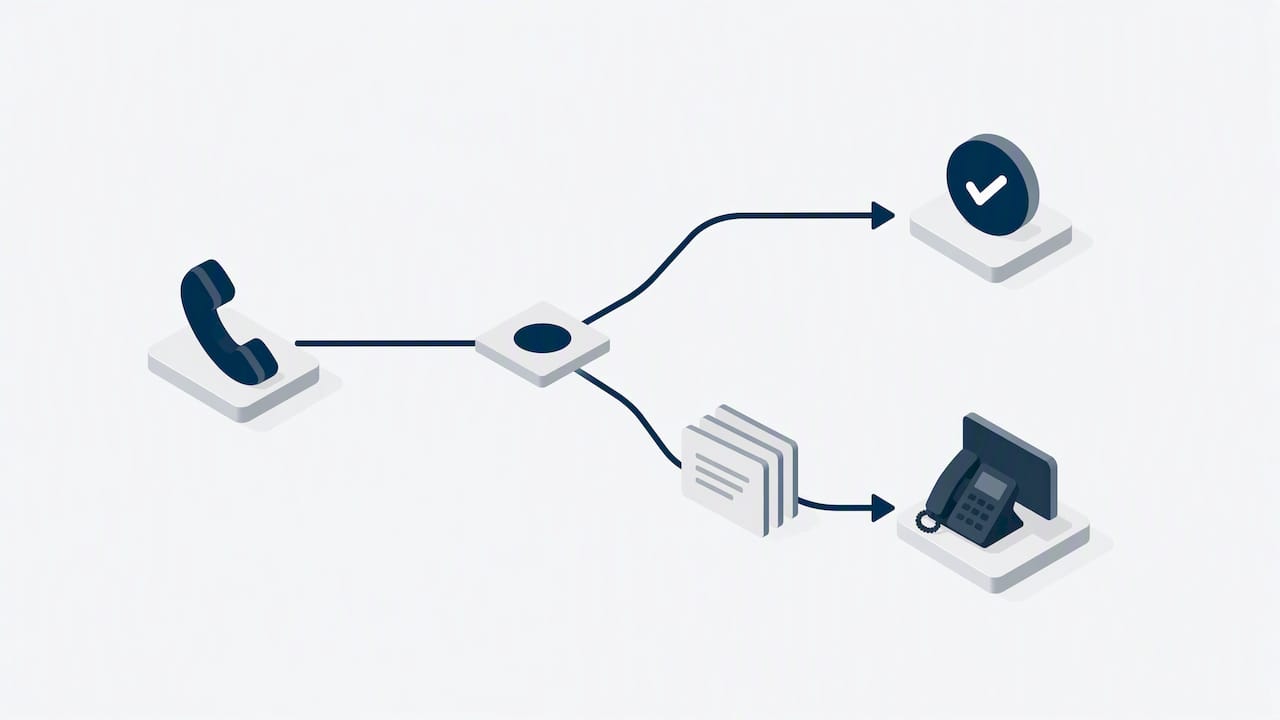
The most human thing an agent can do is recognise it is out of its depth. A caller who is upset, a complaint about a bad repair, a patient describing worrying symptoms: these need a person. An agent that says “Let me put you through to someone who can help” and passes the call with context is behaving well. One that keeps pushing through a script is not.
Should your AI sound exactly like a person?
There is a tension here, and it is worth being straight about it.
A natural voice makes calls easier. A voice built to fool people into thinking they are speaking to a human is a different goal, and in Australia it is a risky one. The Office of the Australian Information Commissioner says transparency is key when you use AI with customers, and that people should be clearly informed when they are engaging with an AI tool. You can read the detail in the OAIC guidance on commercially available AI products.
Our view is simple. Make the voice pleasant, clear and natural. Do not hide what it is. A short opener such as “Hi, you’ve reached the team at Harbour Plumbing, I’m the virtual assistant” costs you almost nothing. Callers who know they are speaking to an AI tend to get on with the task, especially when the task is booking a time or checking an opening hour.
This is general information, not legal advice. If you are unsure what your disclosure wording should be, ask your solicitor or check the OAIC’s guidance.
Where a human-like voice earns its keep
The research on Australian small business points the same way. NAB’s 2026 research on SMEs and AI found that 40% of Australian SMEs are currently using AI, with a further 13% planning to adopt it soon. It also reports that 58% of AI-adopting SMEs see significant productivity gains in workflow efficiency. Those are survey figures for AI use in general, not results for any one product, but they show where the market is heading.
For phones, the use cases that work best are the repetitive, high-volume ones:
- Missed calls while you are on the job. A sparky under a switchboard cannot answer. The caller rings the next electrician on the list. An agent answers, takes the details and books the quote.
- After-hours coverage. Enquiries that arrive at 7 pm are often the ones ready to buy. An agent can answer, qualify and book into tomorrow’s calendar.
- Clinic and practice bookings. Booking, rescheduling and confirming appointments are structured conversations that suit automation, with front-desk staff free for patients standing in front of them.
- Hospitality enquiries. Table bookings, opening hours, parking and dietary questions fill a phone line at the worst possible time, during service.
- Level 1 support. Order status, password resets and “where do I find…” questions can be answered first, with anything complex logged and passed on.
- First-party payment reminders. Polite, structured reminders about overdue invoices, with a person handling anything that becomes a dispute or a hardship conversation.
You can see how each role is set up on our AI voice agents page.
Example: a booking call that sounds right
Here is the kind of call we aim for, for a hypothetical Sydney plumbing business.
Agent: Hi, you’ve reached Inner West Plumbing. I’m the virtual assistant. How can I help?
Caller: Yeah, I’ve got a hot water system that’s leaking in the laundry.
Agent: Sorry to hear that. Is water pooling now, or is it a slow drip?
Caller: Pretty steady, I’ve turned the water off at the wall.
Agent: Good move. I can get you booked with a plumber today. What’s the suburb?
Caller: Marrickville.
Agent: Thanks. I have 2 pm or 4:30 pm. Which suits you better?
Notice what is happening. The agent acknowledges, asks one useful question at a time, gives two options, and moves toward a booking. If the caller says there is water near a power point, the right move is an immediate handoff to a person, not another question. That rule should be written into the agent before it ever takes a call.
How to test whether a voice agent sounds human enough
Before you put any voice agent on your main line, run this short test. It takes an hour.
- Call it yourself, three times. Once as a polite customer, once as a rushed one, once as a confused one.
- Interrupt it. Does it stop and listen, or talk over you?
- Give it awkward details. A hard-to-spell surname, a suburb with a tricky name, a phone number said in chunks.
- Ask something it should not answer. Pricing for a complex job, a medical question, a complaint. Does it hand off or bluff?
- Check the handoff. When it passes the call to a person, does that person get the caller’s name, reason for calling and what has been said so far? Twilio’s guidance on AI-to-human handoff makes the point that handoffs losing context are a major source of customer dissatisfaction.
- Read the transcripts. Real calls will show you wording that sounds off. Fix the script, not just the voice.
- Ask a staff member to listen. Someone who takes your calls every day will hear what an owner misses.
If an agent fails steps 2, 4 or 5, a prettier voice will not save it.
Where humans should take over
Honest limits matter more than a polished demo. We recommend a person takes the call when:
- the caller is distressed, angry or vulnerable
- the topic involves safety, health or a serious complaint
- a decision carries real consequence, such as refunds, contract changes or hardship arrangements
- the caller asks for a person
- the agent has failed to understand the caller twice
The Australian Cyber Security Centre gives similar advice on control: limit the authority you give AI tools, and keep human oversight on high-stakes decisions such as final payment approval or changes to core business records. Treat the agent as a capable assistant, not a decision-maker.
The iTWire piece on when a conversation should be automated frames it well. The useful question is not whether a call can be automated, but whether the business should automate that decision at that moment. Routine, certain calls go to the agent. Calls with consequence go to your people.
Outbound calls: extra care
A human-like voice on outbound calls, such as lead follow-up or payment reminders, raises the stakes. Three things to check before you start:
- Do Not Call Register. Telemarketing calls to numbers on the register are restricted, and telemarketers must follow additional rules on calling times and identifying themselves, as the ACMA’s telemarketing guidance explains. Check whether your calls count as telemarketing and whether your list is washed.
- Privacy Act. The OAIC states that privacy obligations apply to personal information put into an AI system and to AI output that contains personal information. Do your due diligence on any provider.
- AI disclosure. Tell people they are speaking with an AI tool.
The National AI Centre’s overview of AI and Australian law is a good starting point for the wider picture. None of this is legal advice. Get your own advice before launching outbound campaigns. For collections specifically, keep the agent to first-party reminders and give people an easy path to a person.
Our view: automate the certainty, keep the humans for the moments that matter
We get asked often whether the goal is an AI that nobody can tell from a person. It is not.
The goal is a phone line that is never unanswered and never wastes your best people’s time. We build agents to take the repetitive, high-volume calls: bookings, opening hours, status checks, first-pass qualification. Then every human moment goes to a person: the worried patient, the unhappy customer, the negotiation, the close. We do not frame this as replacing staff. A receptionist who is no longer interrupted forty times a day can actually look after the person at the counter.
That is why we build handoff in from day one, and why every agent has human-in-the-loop quality review. We read transcripts, spot where an agent stumbled, and tighten the script. A voice that sounds human at the start will not stay that way unless somebody keeps checking it.
Our practical advice for an owner starting out:
- Start with one job, usually missed or after-hours calls.
- Write down the five questions callers ask most.
- Decide in advance which calls must always go to a person.
- Connect the calendar or CRM so the agent can do something real.
- Review transcripts weekly for the first month.
We can usually have an agent live in 3 to 5 days, with no lock-in contracts. If you want the safe-pilot angle, our guide to running a 30-day AI pilot against an answering service walks through it.
— Alston
Voice cloning: when your own voice makes sense
Some owners want the agent to sound like them or like their existing receptionist. Voice cloning can give a brand a consistent sound, but it needs the speaker’s clear consent and honest disclosure to callers. We explain our approach in AI voice cloning for Australian SMEs. If you are not sure, start with a standard natural voice and add cloning later.
A human-sounding voice for your business phone line
If you want a voice that answers real calls, books real jobs and hands over cleanly, look at our AI Receptionist. It answers 24/7, works in 9+ languages, plugs into the calendars and CRMs you already use, and passes complex calls to your team. Pricing is tailored to each business across our Starter, Growth and Scale plans, which you can see on our pricing page.
FAQ
What is the most human-like AI voice for business calls?
There is no single best voice, because the test is how the agent performs on a live call. Look for fast responses, clean interruption handling, accurate understanding and a reliable handoff. Call it yourself with awkward requests before you commit.
Do I have to tell callers they are speaking to an AI?
We recommend you do. The OAIC says users should be clearly informed when they are engaging with an AI tool. A short, friendly line at the start of the call is enough. Check your own obligations with a solicitor.
Will a human-sounding AI replace my receptionist?
No. It takes the repetitive calls, such as bookings and common questions, so your staff can handle the conversations that need empathy and judgment. Complex or sensitive calls should always pass to a person.
Can an AI voice agent handle different accents and languages?
Our agents work in 9+ languages. Accents and background noise are still a real test, so we recommend trying your own team’s voices and your common suburb and street names during setup. Transcript reviews help us correct anything that is misheard.
How long does it take to set up?
We aim to have an agent live in 3 to 5 days. Timing depends on your integrations and how clearly you can define the calls it should take and the ones it should pass on.
Hear it on your own calls
The quickest way to judge a human-like AI voice is to hear it handle your real questions. Book a free 15-minute demo and we will show you how an agent would answer for your business.
Sources
- AI changing how Australian SMEs get work done, NAB
- Guidance on privacy and the use of commercially available AI products, OAIC
- Using AI securely in your business, Australian Cyber Security Centre
- When should a customer conversation be automated and when should a human take over, iTWire
- How to design an AI-to-human handoff that preserves context, Twilio
- Dealing with telemarketing, ACMA
- AI and Australian law, National AI Centre
Recommended
- AI Voice Agents — Receptionist, Sales, Support & Collections
- AI Voice Cloning for Australian SMEs: Automate, Don’t Replace Staff
- Voice AI Latency: Why Pauses Cost You Callers
- Make AI Agents Trustworthy and Live in 3–5 Days for Service Businesses
This article is general information about AI voice technology and isn’t legal or compliance advice. Requirements for call recording, AI disclosure and outbound calling vary by state and use case.