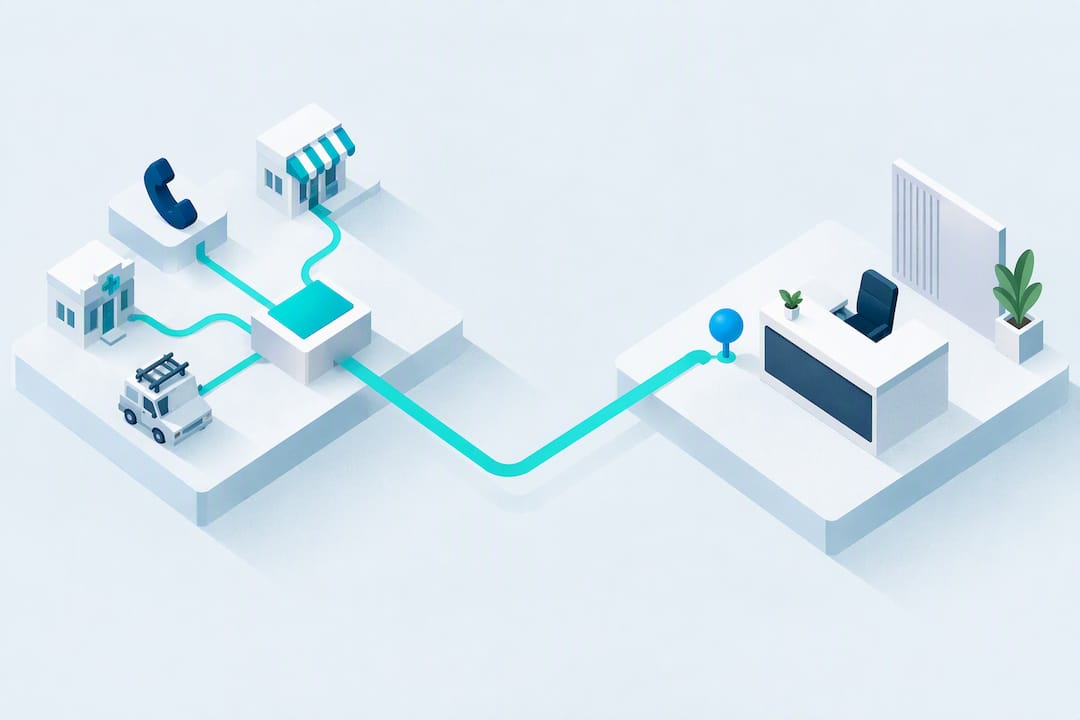
Call flow design is the process of mapping how a caller moves from greeting to resolution, including every routing decision, hold point and handoff along the way. The first action to take is simple: list your top caller intents and design the shortest path from each one to a successful outcome. Done well, this cuts transfers, shortens calls and lifts completion rates. Options like AI voice agents can help small teams build and test these flows quickly.
Table of Contents
- What a call flow is and why it matters for your customer experience
- Step-by-step call flow design sequence to follow
- Choosing tooling: the platform features that actually matter
- Test, pilot and roll out: a practical validation checklist for SMEs
- Measure and optimise: the metrics and cadence that show a flow is healthy
- How we apply call flow design with AI voice agents and the practical limits of AI agents
- Author note from Alston: quick priorities for busy small teams
- How 42Voice fits into your call flow, and the next step
- FAQ
- Sources
What a call flow is and why it matters for your customer experience
A call flow is the sequence a caller follows once they dial your number. It has recognisable parts: a greeting, intent capture (what does the caller actually want?), routing logic, a hold or queue if nobody is free, a human handoff when needed, and whatever happens after the call ends, like a confirmation text or a CRM update.
When any of these steps is vague or missing, callers feel it immediately. They repeat themselves, get bounced between menus, or sit on hold with no sense of how long it will take. Every extra step adds cognitive load, and cognitive load is what drives transfers and repeat contacts, the two costliest outcomes in any contact operation.
Common scenarios where this plays out:
- A booking caller gets stuck in a general support queue instead of reaching a scheduling flow.
- A payment query loops through identity checks that don’t match what the caller already provided.
- A triage call for urgent support gets the same wait time as a routine question.
Each of these is a design problem, not a staffing problem.
Step-by-step call flow design sequence to follow
Building a workable flow follows a fairly predictable sequence, and skipping steps is where most flows go wrong.
- Map your top caller intents. Pull recent call logs or transcripts and rank intents by volume. Design the shortest successful route for the top three or four first.
- Design the greeting and minimal identification. Ask only for what you need to route the call. Over-collecting data at this stage slows everyone down and raises privacy obligations unnecessarily.
- Set routing rules. Route by intent, urgency, skill, agent availability, calendar signals, CRM status or language. The more signals you use, the fewer dead-end transfers you’ll have.
- Build explicit fallback and handoff rules. Define what happens on silence, repeated misrecognition or an unclear request, and make sure the handoff carries the caller’s captured context so they never repeat themselves to a human agent.
- Validate, version and plan a rollback before anything goes live.
That last step matters more than it sounds. The BSBCCO603A training unit for designing contact facilities treats technology, people, service delivery and testing as one connected design problem, not separate jobs. It explicitly calls for detailed specifications, testing procedures and launch activities before a new contact process goes live, which is a useful discipline even for a two-person support desk.
A 2026 Australian contact-centre report lays out a near-identical sequence: map intents, pick the shortest route, add identification, route by context, define fallback, test with real speech patterns and background noise, publish with a rollback plan, then review recordings and completion rates. Following that order, rather than designing routing first and intent capture as an afterthought, is what keeps flows maintainable.
Pro Tip: Write your fallback and handoff rules before you write a single prompt. Flows designed greeting-first tend to bolt on recovery logic late, and it shows.
Choosing tooling: the platform features that actually matter
Plenty of platforms will let you build a call flow. Fewer let you maintain one without breaking it every time a staff member leaves or a business rule changes. When comparing options, focus on capability rather than brand.
- A visual designer with reusable components. Drag-and-drop canvases that let non-technical staff adjust routing without touching code, plus import and export for backing up or replicating flows.
- A testing sandbox and version control. You need to trial changes against real scripts and roll back instantly if a new version breaks something.
- Integrations that match your stack. Calendar systems for bookings, CRM for context, ticketing for support handoffs, telephony for the actual call, and analytics for measurement.
- Clear governance. Someone owns the flow, frontline staff get a say in testing it, and access control stops ad hoc edits from going live unreviewed.
The training.gov.au unit on contact facility design backs this governance point directly: it frames design and testing procedures as something operations owners and frontline staff need to be involved in, not just whoever built the original menu. A flow that only one person understands is a liability the moment they’re on leave.
Test, pilot and roll out: a practical validation checklist for SMEs
Before any flow goes live, run it through a structured test, not just a quick click-through.
- Unit test the prompts and recognition. Check that common phrasings, accents and background noise don’t break intent capture.
- Scenario test your top intents and failure modes. Walk through bookings, cancellations, complaints and anything urgent, deliberately included.
- Pilot on limited traffic. Route a small slice of calls through the new flow and watch transfer rate and abandonment before scaling up.
- Rehearse the handoff. Confirm the receiving agent actually gets the caller’s captured intent and context, not a cold transfer.
- Set rollback criteria in advance. Decide what abandonment or transfer rate triggers an immediate switch back to the old flow.
The handoff rehearsal step deserves extra attention. Analysis from Customer Science on IVR optimisation flags the human handover as a recurring point of failure, even in otherwise well-designed self-service systems. Shallow menus don’t fix a bad handoff; only deliberate handoff design does.
Pro Tip: Run your pilot during your actual peak hour, not a quiet Tuesday morning. Failure modes show up under load, not in a calm test call.
Measure and optimise: the metrics and cadence that show a flow is healthy
A flow isn’t finished once it’s live. It needs a small set of metrics checked on a regular cadence, ideally weekly while it’s new, then monthly once it settles.
- Outcome metrics: booking completion, payment completion, issue resolution. This is the number that actually matters to the business.
- Operational metrics: containment rate, transfer rate, repeat contact, abandonment, time to answer.
- Quality metrics: misunderstood-intent rate, handoff quality, complaint volume.
A small share of contact centres achieved a genuinely smooth transition from self-service to a live agent, according to the 2026 Australian contact-centre best practice report. That’s the clearest sign that handoff design, not menu design, is where most flows actually fail.
Measuring outcome alongside containment matters because outcome-focused metrics catch a flow that contains calls well but fails to actually resolve them. A simple A/B test, like comparing two greeting scripts or two fallback thresholds, is often enough to find the next improvement.

How we apply call flow design with AI voice agents and the practical limits of AI agents
We build role-based AI voice agents that slot into specific points in a call flow rather than replacing the whole operation. Our AI Receptionist handles inbound triage and after-hours bookings, our Tier-1 help desk agent takes routine support questions, and our collections agent handles first-party payment reminders.
Every agent runs with human-in-the-loop quality review, and when a call needs a person, the captured intent and context go with it so nobody has to repeat themselves. We’re upfront about where AI shouldn’t be making the call: vulnerable callers, disputes and complex negotiations need a human. For outbound sales or collections work, we build in checks for the Do Not Call Register, privacy disclosure and consent capture at the point of contact.
Author note from Alston: quick priorities for busy small teams
Start with your top one or two call drivers. Don’t try to automate everything at once, automate narrowly and measure before expanding. Keep handoff rules explicit, get frontline staff into testing, and treat your flow as an ongoing process you revisit in short cycles, not a project you finish once.
— Alston
How 42Voice fits into your call flow, and the next step
If you’re mapping flows for bookings, support or after-hours cover, our AI Receptionist and help desk agents are built to drop into those exact points, live in 3 to 5 days with no lock-in contract. Every handoff carries full context to your team, and plans range from Starter to Scale depending on call volume, priced on request through our pricing page.

Book a free 15-minute demo at 42voice and we’ll map your top call drivers together.
FAQ
What are the 6 steps of the call flow process?
A typical sequence is: map top caller intents, design greeting and identification, set routing rules, define fallback and handoff protocols, test and validate, then publish with a rollback plan. This order, tested in Australian contact-centre guidance, keeps routing decisions grounded in real caller demand rather than guesswork.
Can you provide an example of a call flow?
A simple inbound example: greeting, intent capture (“booking” or “support”), a business-hours check, a calendar or CRM action for bookings, a confirmation message, and immediate transfer to a human for anything ambiguous, urgent or sensitive. This narrow structure is a common safe starting point for small teams automating their first flow.
What is call flow in Genesys?
In platforms like Genesys, a call flow is typically built as a visual sequence of connected actions, menus and tasks, with reusable components, prompts and built-in validation before deployment. The same design principles apply regardless of platform: map intents, route with context, and test before publishing.
How do I handle complex interactions like conference calls or IVR menu inputs?
Treat these as separate branches within the flow, with their own fallback and escalation rules rather than folding them into a general menu. Test them under real call volume, since failure modes in complex branches, like multi-party transfers, often only surface under load.
Do outbound call flows have extra compliance requirements?
Yes. Outbound sales or collections calls to Australian numbers need a check against the Do Not Call Register unless consent or an exemption applies, along with clear identification and adherence to permitted calling hours. Privacy disclosure and consent capture should also be built into the flow at or before the point personal information is collected, per ACMA’s consumer consent guidance.
Sources
- 2026 Australian contact-centre best practice report
- Training
- Do Not Call Register (ACMA)
- IVR optimisation to improve self-service in contact centres (Customer Science)
Recommended
- Deploy AI Call Scripts for SMBs in 3–5 Days Without Vendor Delays
- Go Live in 3–5 Days: Rapid Voice Agent Deployment for SMB Procurement
This article is general information about AI voice technology and isn’t legal or compliance advice. Requirements for call recording, AI disclosure and outbound calling vary by state and use case.