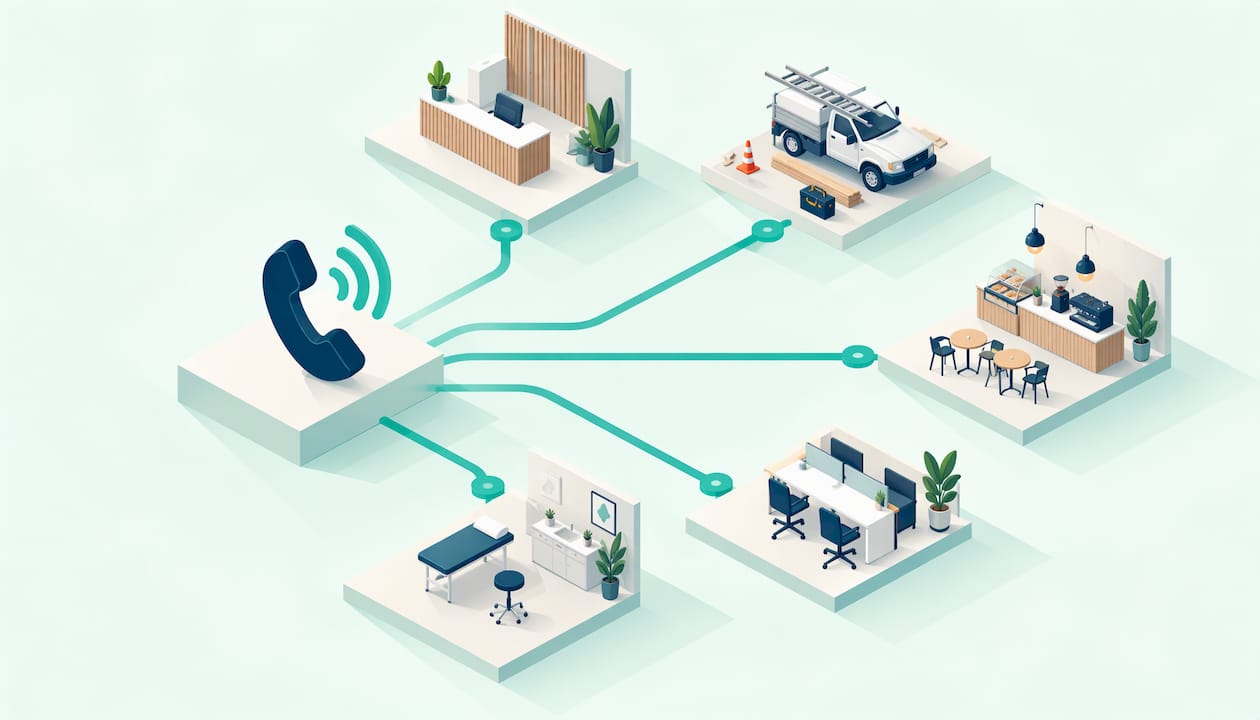
The simplest way to cover public holidays is to stop treating them as “closed” and start treating them as a call-handling schedule. Pick which calls must be answered, decide who takes over when a call needs a human, then let an AI voice agent or another answering option take the routine ones. Set it up once, test it, and it runs every year.
I’m Alston from 42Voice. Below is the plan we’d give an Australian business owner: why holiday calls matter, which holidays apply to you, the coverage options, how to set up routing, and where a person must take over.
Table of Contents
- Why public holiday calls are worth answering
- Which public holidays apply to your business
- What to decide before the long weekend
- Your call coverage options
- How to set up holiday routing that runs itself
- Where AI voice agents fit, and where people take over
- Privacy and call handling rules to keep in mind
- Outbound calls on public holidays
- The staffing side: what if your team is working
- Perspective: why we build for the calls nobody wants to answer
- How 42Voice covers public holiday calls
- FAQ
- Sources
Why public holiday calls are worth answering
Customers don’t check your calendar before they ring. A plumber with a burst pipe, a patient who needs to move an appointment, a restaurant guest asking about a long-weekend table: they all call on the day they have the problem.
Customer service matters to Australian small businesses. An ACMA report on business telco experience found that 89% of Australian small and medium-sized businesses consider good customer service extremely or very important to their operations. Your customers hold you to the same standard, holiday or not.
A phone that rings out, or drops into a full voicemail box, tells the caller one thing: try someone else. For trades, clinics and hospitality venues, the long weekends are often the busiest enquiry periods, because people finally have time to book the job, the check-up or the function.
You don’t need to staff a desk to fix this. You need every call to get a useful outcome: answered, booked, logged, or passed to a person when it counts.
Which public holidays apply to your business
Australian public holidays work in layers. Some days apply nationwide, such as New Year’s Day, Anzac Day, Christmas Day and Boxing Day. Others are set by each state or territory, such as Labour Day or regional show days. The Fair Work Ombudsman’s public holiday list sets this out by jurisdiction and is updated every year.
What this means for your phones:
- One location: load your state’s list, plus any local holiday that affects your suburb or region.
- Multiple states: each location needs its own holiday calendar. A Melbourne clinic and a Brisbane clinic are not closed on the same days.
- Mixed hours: some days you’ll be fully closed, some you’ll run reduced hours. Treat those as different call-handling modes, not one “holiday” switch.
One habit saves a lot of grief: when the new year’s list is published, check it against your phone schedule in the same sitting you update your roster.
What to decide before the long weekend
Before you pick a tool, work out what callers actually want. Pull up last year’s call log or voicemail and sort the calls into reasons. Most small businesses find a handful of repeat types:
- Booking or changing an appointment. Routine, high volume, and easy to automate with a calendar connection.
- Opening hours and “are you open?” questions. The most predictable calls of any holiday.
- New enquiries and quotes. Valuable, time-sensitive, and worth capturing with proper details.
- Existing customer questions. Order status, invoice queries, account details.
- Urgent or emergency calls. A flooded kitchen, a dental injury, a locked-out tenant.
For each type, choose one of four outcomes: the agent handles it end to end, the agent takes a message with details, the agent transfers to an on-call person, or the call gets a recorded answer and a callback the next business day.
The urgent category is where owners should spend the most thought. Write down exactly what counts as urgent for your business, who’s on call, and what the backup is if they don’t pick up. Keep the definition tight, otherwise your own phone rings all weekend.
Your call coverage options
There are a few ways to keep calls answered on a public holiday. Each suits a different business.
| Option | Best for | What to watch |
|---|---|---|
| Voicemail with a holiday greeting | Very low call volume, no urgent calls | Callers often hang up without leaving a message, and nothing gets booked |
| Call forwarding to a mobile | Owner-operators happy to be reachable | You’re on call all weekend, and calls can reach you at bad moments |
| Human answering service or virtual receptionist | Businesses that want a person taking messages | Cost scales with call volume, and staff need your scripts and updates |
| AI voice agent with human handoff | Routine, repetitive calls such as bookings and enquiries | Needs good setup, clear escalation rules and ongoing review |
| Mix of the above | Most SMEs | More moving parts, so document who covers what |
There’s no single right answer. A sole-trader electrician might forward only the urgent calls and let an agent handle the rest. A dental clinic might want the agent to book, reschedule and answer fee or location questions, with a transfer to an on-call dentist for trauma.
If you’re comparing options, an AI receptionist for small business is one of the quickest to put in front of customers because it doesn’t depend on rostering anyone.
How to set up holiday routing that runs itself
The goal is a setup that switches on by date, so nobody has to remember to change it at 5 pm before a long weekend. Here is the sequence we use with customers.
1. Build a holiday calendar
Enter every public holiday that affects you for the year, plus any planned shutdown such as the Christmas to New Year break. Use your state or territory’s list from the Fair Work page above. Keep this separate from your normal weekly hours, so holiday rules override them and don’t edit them.
2. Write the holiday greeting
Keep it short and useful. Say you’re closed or on reduced hours today, when you reopen, what the caller can still do (book, leave details, get urgent help) and how to reach someone for an emergency. Don’t read a long list of dates.
3. Map each call type to an outcome
Use the list from earlier. Bookings go to the calendar. Quote requests go to a form-style capture: name, number, suburb, job type, preferred time. Urgent calls go to the on-call transfer. Everything else gets a message and a promised callback time.

4. Connect your systems
An answering setup that can’t see your diary will double-book people. Connect the calendar so the agent offers only real available slots, and send call summaries into your CRM or job management tool so Tuesday’s team starts with a clean list, not a pile of voicemails.
5. Set the escalation path
Name a first contact, a second contact and a final fallback, with a time limit on each. If nobody answers, the caller shouldn’t be dropped. They should get a message option and a clear promise of what happens next.
6. Test it like a customer
Ring the number from a mobile on a quiet day. Try the booking path, the urgent path and the “nobody picks up” path. Listen for awkward pauses, wrong hours and transfers that go to the wrong person. Do it again before the first holiday of the year, and again after you change your hours.
Where AI voice agents fit, and where people take over
An AI voice agent is good at the repetitive, high-volume calls: booking, rescheduling, hours, location, basic status questions, and capturing details from new enquiries. It answers straight away, doesn’t need a roster, and handles more than one call at a time.
It isn’t the right choice for everything. A person should take over when:
- The caller is distressed, angry or describing something frightening.
- The call involves a medical emergency or safety risk. The caller should be directed to Triple Zero (000) first.
- The caller is negotiating a price, a complaint or a complicated exception.
- The caller simply asks for a human. That request should always be honoured.
That’s the principle we build around: the agent takes the repetitive calls so your team can give attention to the conversations that need nuance, empathy and judgment. It doesn’t replace your staff. It means a person isn’t stuck on the phones repeating opening hours while the real work waits.
Two practical details make handoff feel smooth. First, the agent should pass context along: who is calling, what they’ve said, and what has already been tried, so the caller doesn’t start again. Second, someone should review a sample of calls after each holiday period. Our agents are backed by human-in-the-loop quality control, and we recommend every business review transcripts regularly, tune the answers and fix anything the agent got wrong.
Privacy and call handling rules to keep in mind
Holiday calls often collect names, numbers and addresses, so privacy applies in the same way as any other day. We’re not giving legal advice, but these are the points Australian businesses should check.
- Protect what you collect. The Privacy Act 1988 expects covered organisations to take reasonable steps to protect personal information, including names and phone numbers, from unauthorised access, misuse, interference or loss. The OAIC’s guidance on protecting customers’ personal information explains what that looks like in practice.
- Collect only what you need. The Australian Privacy Principles say personal information must be reasonably necessary for your functions, and that people must be told about the collection. Your greeting or a short line at the start of the call can do part of that job.
- Use it for the reason you collected it. A holiday booking enquiry shouldn’t turn into a marketing list without a proper basis.
- Be upfront about AI. If an AI agent answers, tell the caller. It builds trust and avoids confusion, and it’s good practice regardless of your sector.
- Know who handles the data. Check where call recordings and transcripts are stored and who can see them, whether the provider is a person or software.
If you’re unsure how any of this applies to your business, speak to a privacy lawyer or check the OAIC’s guidance directly.
Outbound calls on public holidays
If your holiday plan includes outbound calling, such as sales follow-ups or overdue payment reminders, the rules are different from answering inbound calls. The ACMA’s telemarketing guidance says telemarketers must not call on national public holidays, and that telemarketing calls may only be made on weekdays between 9 am and 8 pm and Saturdays between 9 am and 5 pm, not on Sundays.
For outbound work, that means:
- Build the same holiday calendar into your dialling schedule, and pause campaigns automatically.
- Check numbers against the Do Not Call Register before any telemarketing call.
- Keep your Privacy Act obligations in mind for any list you use.
- Disclose that the caller is an AI voice agent where appropriate.
- Treat debt collection calls with extra care: keep them respectful and be ready to hand to a person when someone is struggling.
These are considerations, not legal advice. Check with your adviser or the ACMA before running outbound campaigns over a holiday period.
The staffing side: what if your team is working
If some of your people work on public holidays, that’s a separate matter from phone coverage. Public holiday entitlements come from the National Employment Standards and any applicable award or agreement, and your obligations depend on your situation. The Fair Work Ombudsman is the place to check. As an example of why planning matters, its own phone lines are closed on public holidays, which is worth remembering if you plan to ask them a question on a long weekend.
An automated first line can reduce how many people you need on the phones on the day. That’s the point: your team can have the break, and the calls still get handled.
Perspective: why we build for the calls nobody wants to answer
Most owners tell us the same thing: the public holiday isn’t the problem, the Tuesday after it is. Forty voicemails, half without a number, and a customer who already booked someone else.
Our view is simple. Repetitive calls should be handled by an AI voice agent, and every human moment should go to a person. Bookings, hours, quote capture and first-line questions are well suited to automation. A frightened patient, a stressed customer or a tricky negotiation is not, and we build our agents to hand those over, with context, rather than bluff through them.
That’s why we pair every agent with human-in-the-loop quality control, calendar and CRM integrations, and a clear handoff path. You get the coverage of a phone that never sleeps, and your team keeps the work that needs them. We don’t see this as replacing staff. We see it as giving them their long weekend back.
Alston
How 42Voice covers public holiday calls
Our AI Receptionist answers inbound calls around the clock, in multiple languages, books appointments into your calendar and passes anything complex to your team. Agents are typically live in 3 to 5 days, with no lock-in contracts, and they connect to the calendars, CRMs and ticketing tools you already use. If your calls are mostly support questions, the AI Tier-1 Help Desk takes the first line. Pricing is tailored to each business, and you can see the plan structure on our pricing page.

If the next long weekend is close, the practical order is: build your holiday calendar, define urgent calls, connect your diary, and test. We can help with each step.
FAQ
Do I have to answer the phone on a public holiday?
No law says every business must answer calls on a public holiday, but your customers will still ring. If you operate or take bookings that day, or if urgent calls are part of your service, plan for coverage. Check Fair Work if you have staff working the day.
Can an AI voice agent handle urgent calls over a long weekend?
It can recognise an urgent call, collect key details and transfer to your on-call person. It shouldn’t handle emergencies alone. For anything life-threatening, callers should be directed to Triple Zero (000). Set clear rules for what counts as urgent, and test the transfer before each holiday.
Can I make sales or collections calls on a public holiday?
Telemarketing calls must not be made on national public holidays, according to the ACMA. Check the Do Not Call Register, your Privacy Act obligations and AI disclosure practices as well. For collections, consider whether a holiday is the right moment. This isn’t legal advice, so check with your adviser.
How long does it take to set up holiday call answering?
A basic version, with a holiday greeting, call types and an escalation contact, can be sorted in an afternoon. With an AI voice agent connected to your calendar and CRM, our agents typically go live in 3 to 5 days. Allow time to test before the first holiday.
What should my holiday greeting say?
Say you’re closed or on reduced hours, when you reopen, what the caller can do now, and how to reach someone in an emergency. Keep it under about 20 seconds. If an AI agent is answering, say so.
Want to see it work on your own calls? Book a free 15-minute demo and we’ll walk you through a holiday setup for your business.
Sources
- ACMA: Telco consumer experience, Australian businesses
- Fair Work Ombudsman: 2026 public holidays
- Fair Work Ombudsman: Call us
- OAIC: Protecting customers’ personal information
- OAIC: Australian Privacy Principles
- ACMA: Dealing with telemarketing
This article is general information about AI voice technology and isn’t legal or compliance advice. Requirements for call recording, AI disclosure and outbound calling vary by state and use case.